Micro Dispenser Machine
Micro Dispensing Automation
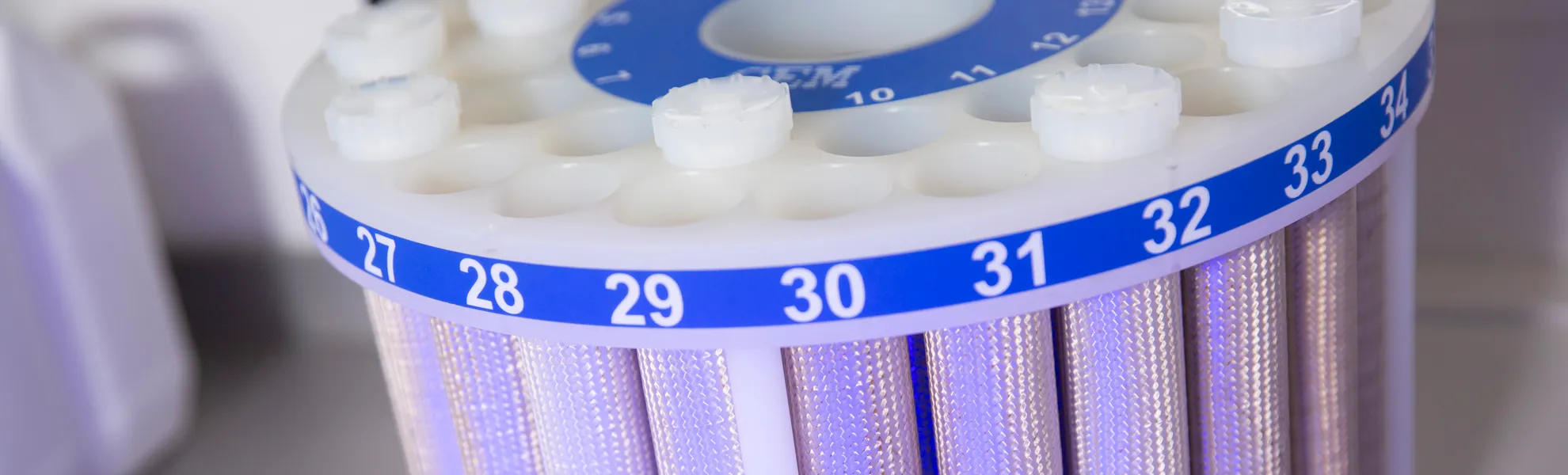
For use with MARS Microwave Digestion System turntables and vessels
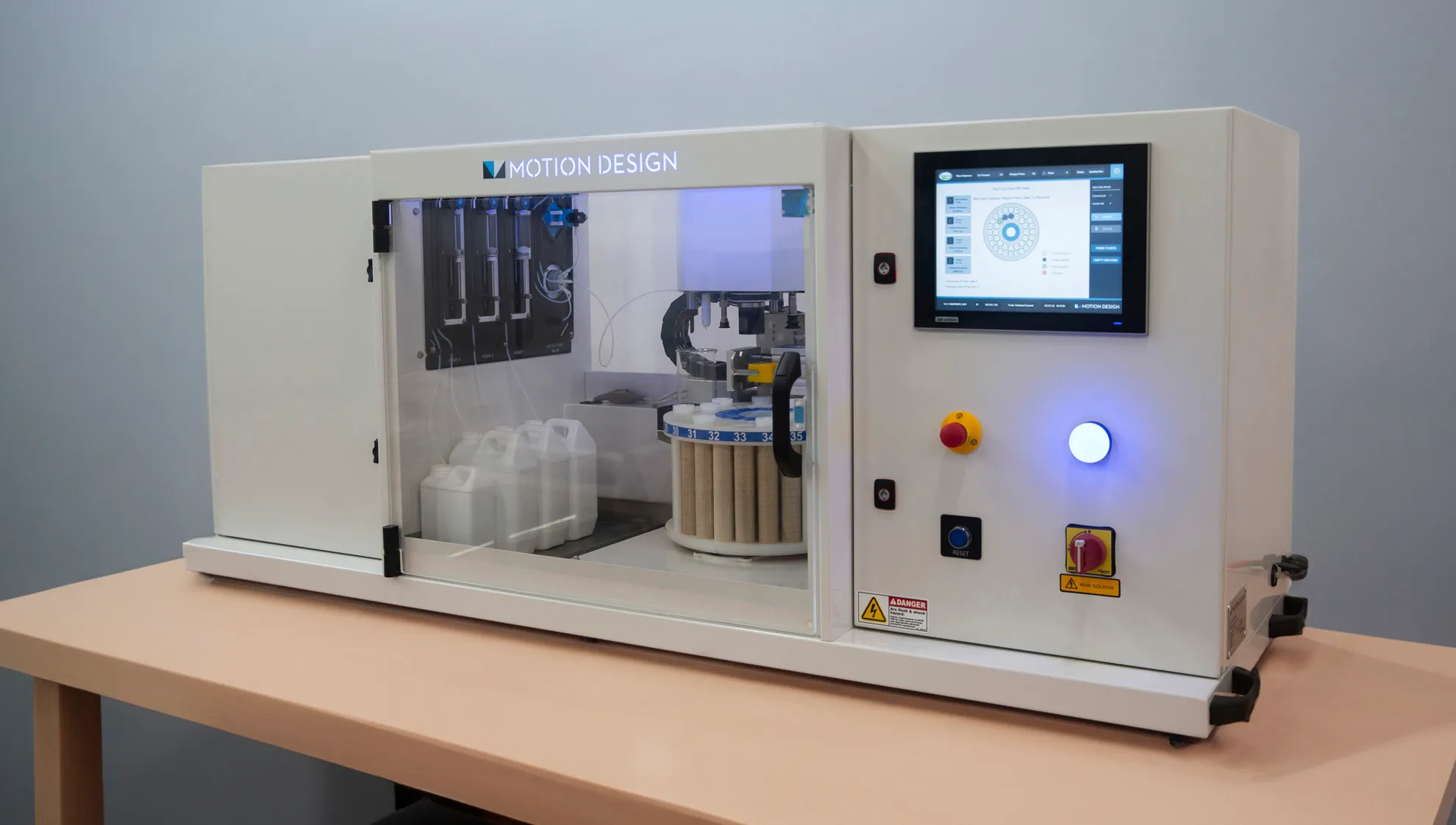
The MARS Micro Dispenser is a specialised laboratory automation solution designed to streamline the high-throughput sample preparation workflow for microwave digestion. By automating high-risk, repetitive tasks - including vessel decapping, precision acid dispensing, and recapping - the system significantly minimises the manual handling of hazardous chemicals and aggressive reagents.
System Overview
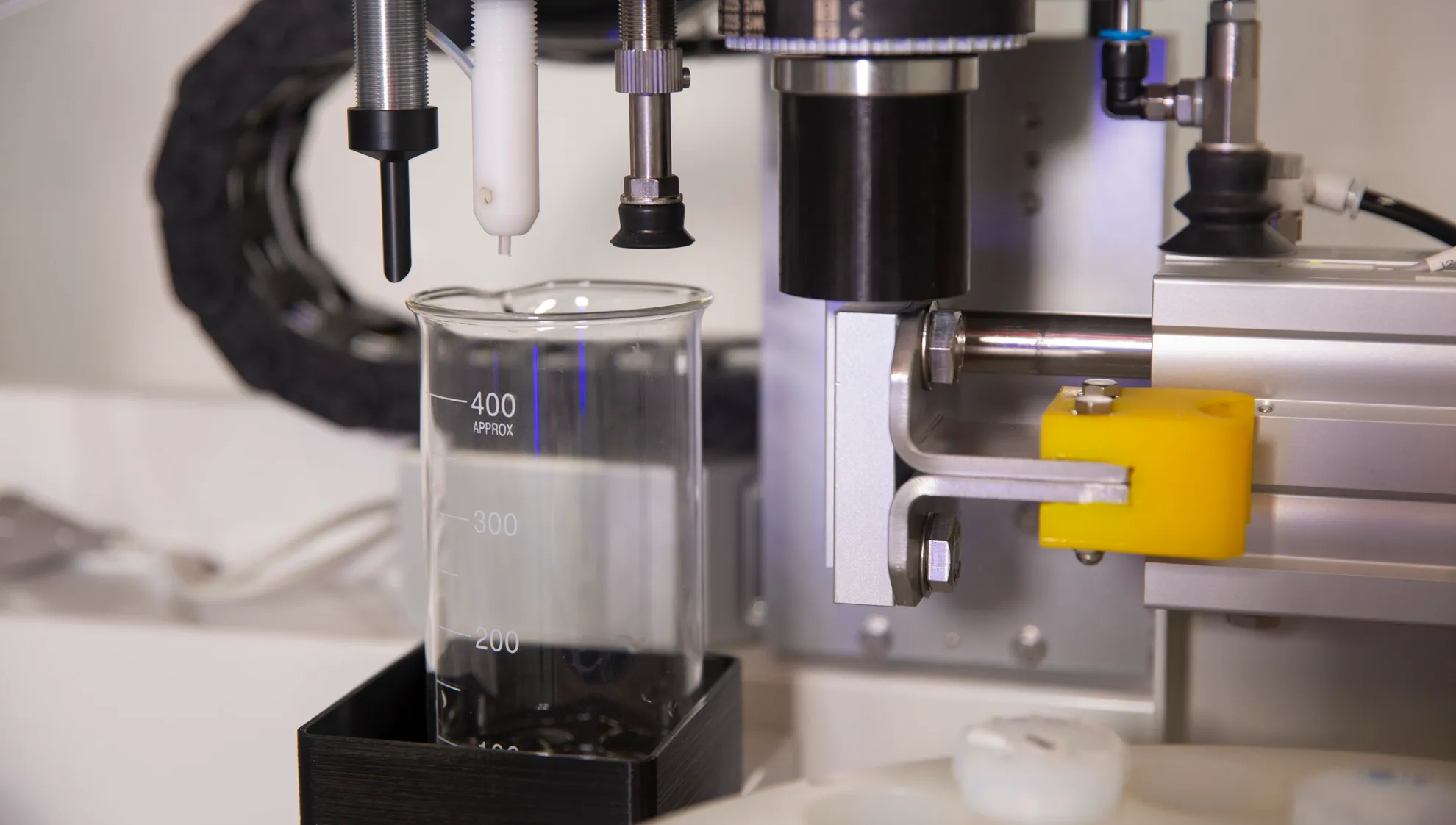
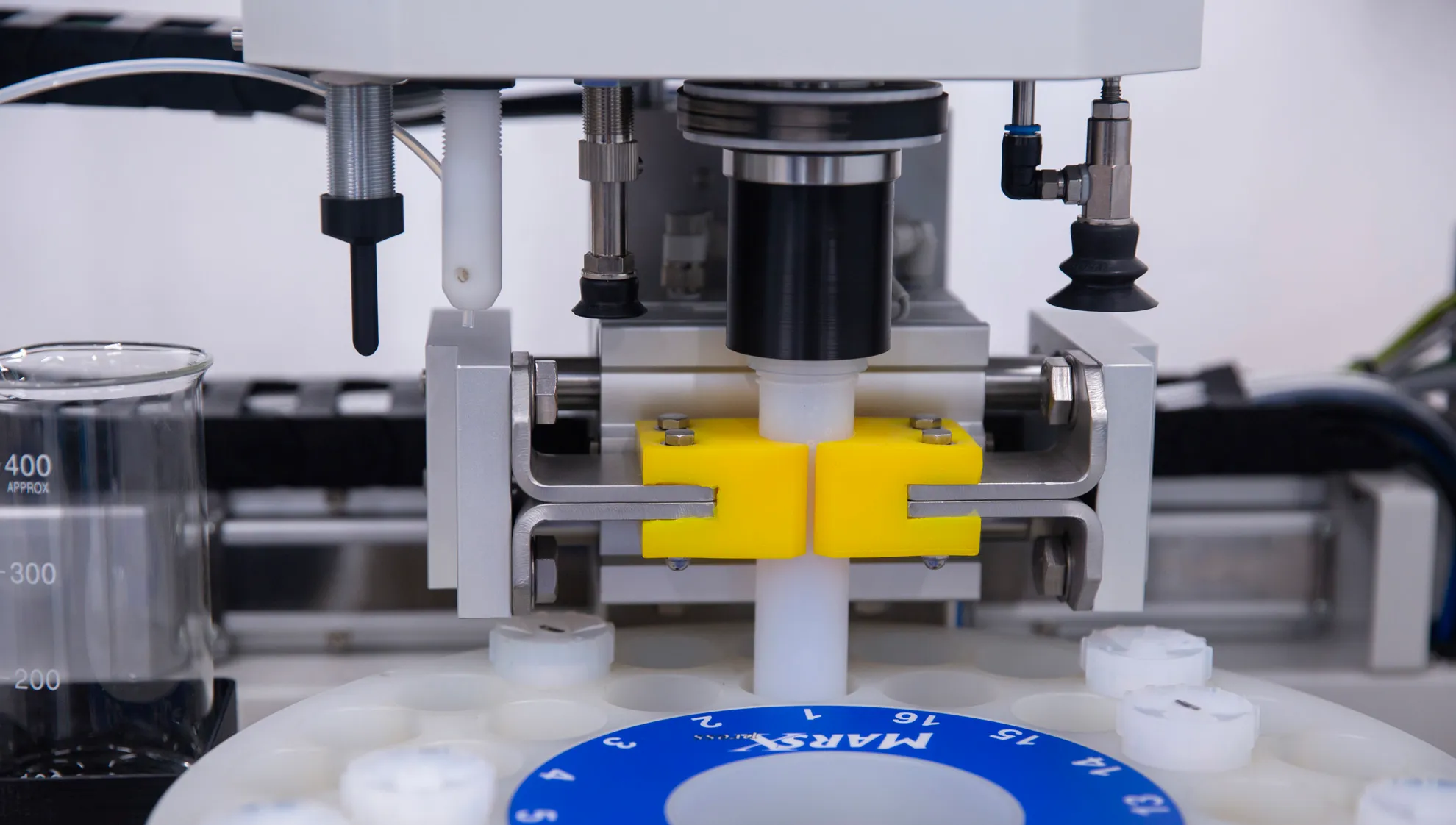
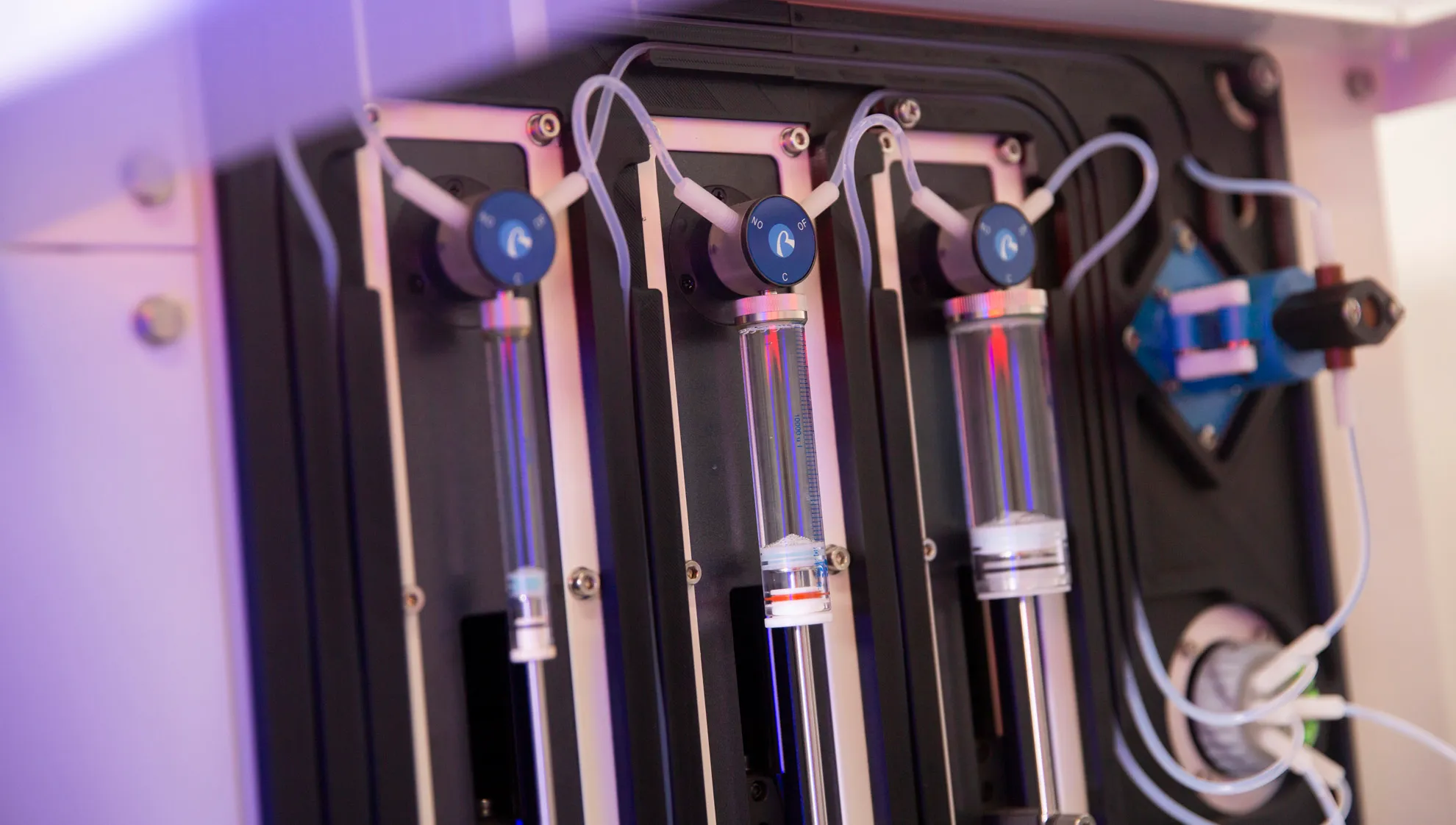
Designed for high-throughput sample preparation, the MARS Micro Dispenser bridges the gap between sample loading and microwave digestion. The system features a chemical-resistant fluoropolymer (PTFE/PFA) fluid path and borosilicate gas-tight syringes, specifically engineered for the safe handling of concentrated acids and corrosive reagents. The robust gantry system manages the complete vessel cycle - removing the cap and bung, dispensing up to four different liquids, and securely re-sealing the vessel - without human intervention.
Find out more: Contact Us
Key Benefits
- Prioritise Safety: Minimises operator exposure to hazardous fumes and dangerous chemicals.
- Frees up laboratory technicians for higher-value analytical tasks.
- Reduces Repetitive Strain Injuries (RSI) by automating manual capping.
- Repeatable and accurate dispensing for consistent ICP-MS and ICP-OES results.
- Audit-Ready Data: Provides total transparency and digital records for every sample.
Application & Workflow Compatibility
The MARS Micro Dispenser is suitable for:
- High-Volume Dairy & Food Testing: to standardise mineral and heavy metal prep.
- Trace Elemental Analysis: Ensuring contamination-free reagent dosing for ICP-MS and ICP-OES workflows.
- Aggressive Acid Handling: Full PTFE/PFA fluid path for safe, automated dispensing of HNO₃, HCl, and HF.
Key Features
- Provides Walk-Away Automation
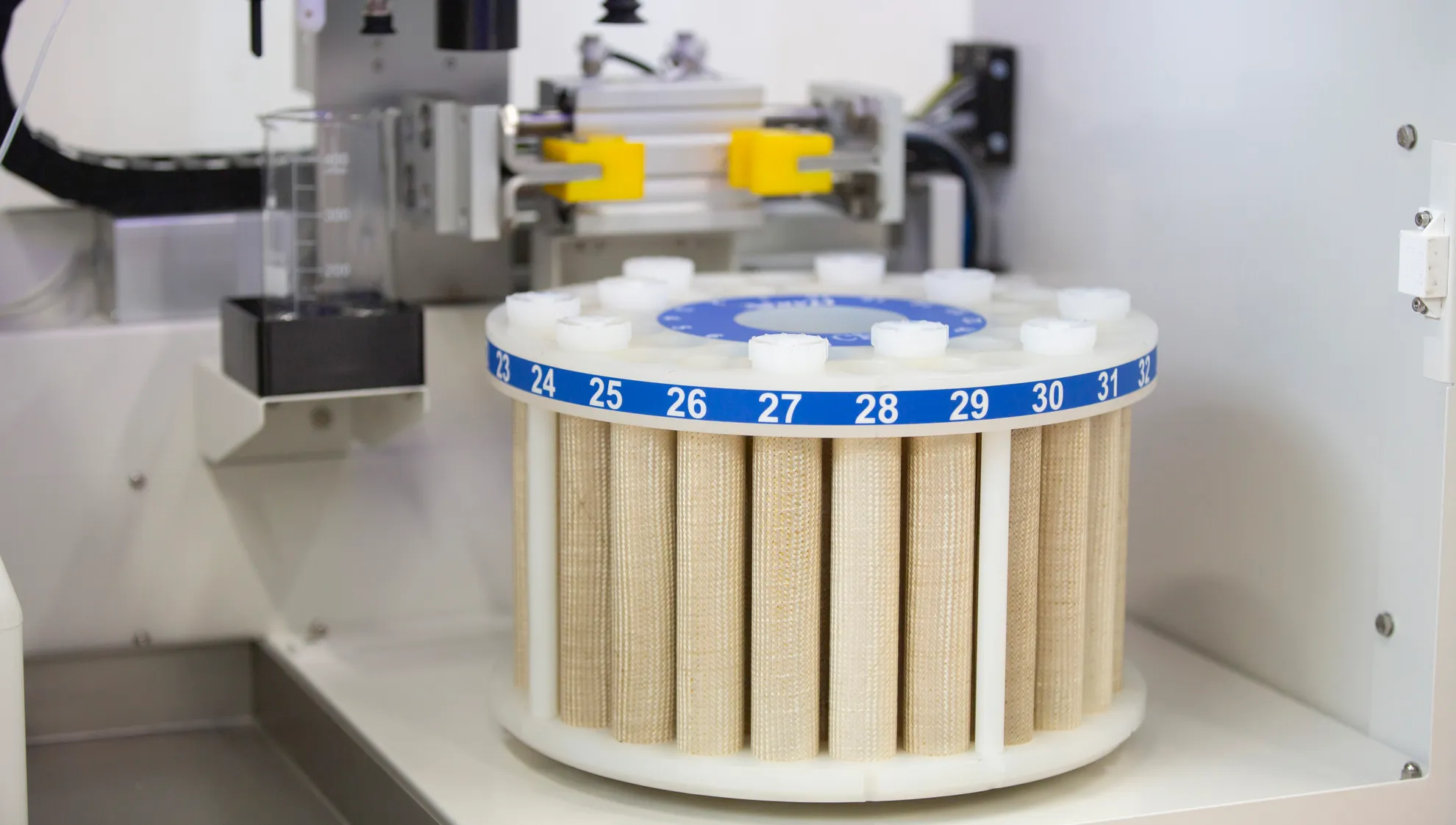
- Automated Capping & Decapping: to ensure consistent vessel sealing. Consistent torque-controlled recapping across all 40 vessels to ensure safety during high-pressure digestion cycles. with configurable application torque
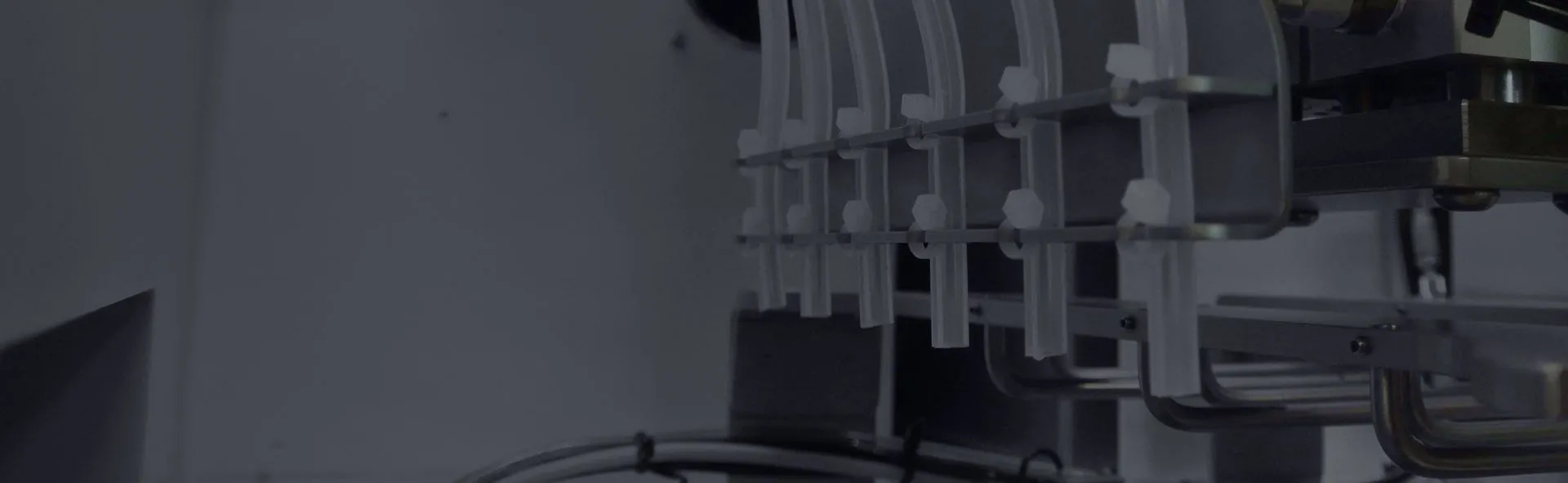
- Precision Volumetric Dispensing: Four-channel pump array (Syringe & Micro) providing volumetric accuracy down to 1% (or +/- 5μl for 500μl dispenses)
- Intelligent Vessel Recognition: Integrated vessel detection sensing and optional non-contact ultrasonic level sensing for automated volume verification.
- Active Fluid Path Protection: nitrogen (lab-supplied) line flushing to prevent cross-contamination and ensure clear reagent delivery between cycles.
- Integrated Control & LIMS Traceability: Software tailored to your workflow. LIMS integration (if required) ensures ISO 17025 compliance by automatically logging every dispense volume, reagent batch, and torque value for a full audit trail.
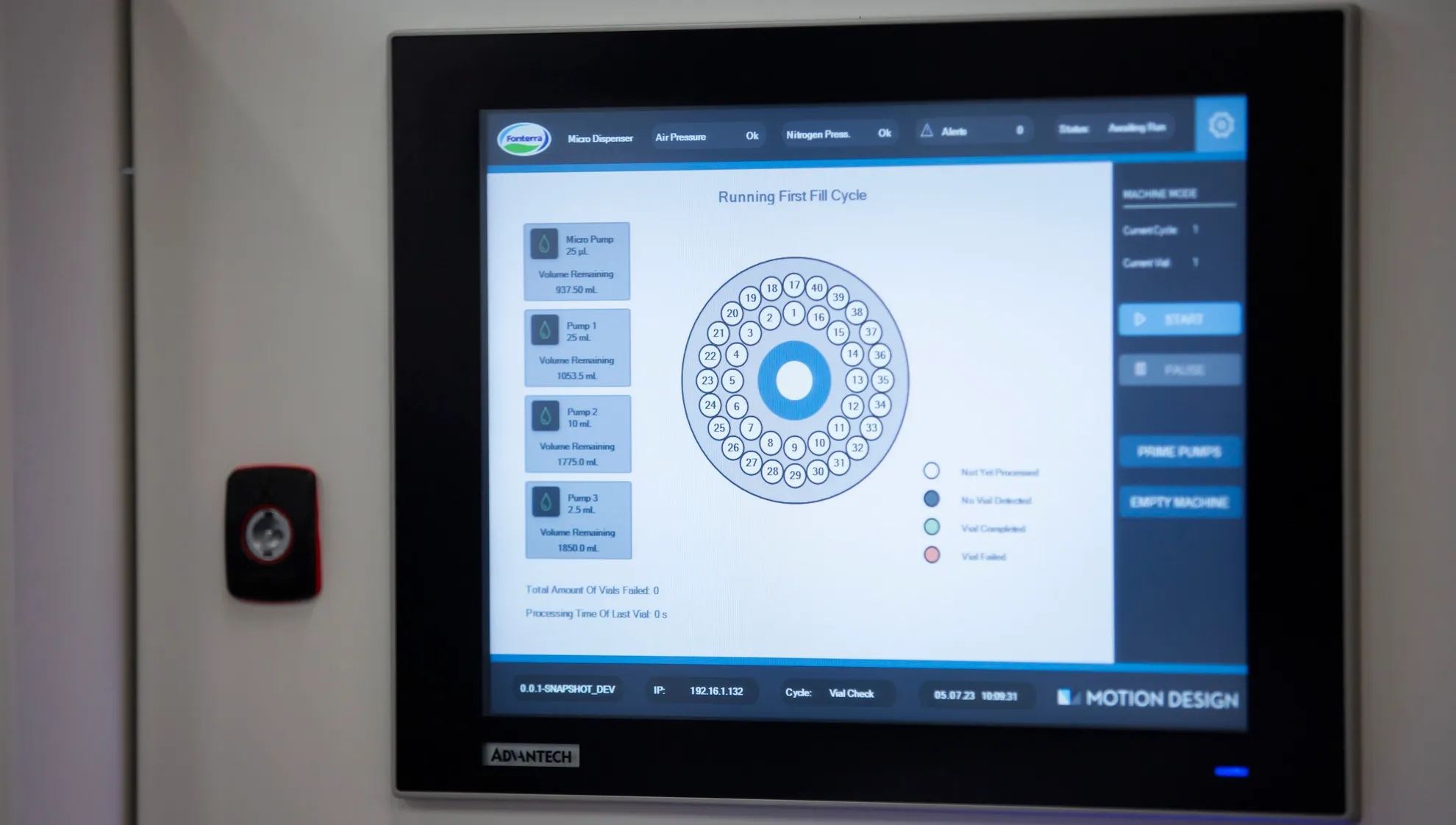
Software Interface
The MARS Micro Dispenser features a touch screen with software tailored to your specific laboratory workflow.
- LIMS Integration: Communication with your Laboratory Information Management System ensures full sample traceability from initial scan to final digestion.
- Automated Logging: Every dispense volume and reagent batch is electronically recorded, eliminating manual transcription and providing a robust audit trail for ISO 17025 compliance.
- Customisable Workflows: Easily configure sequence protocols for different sample matrices and vessel types.
Technical Information
Cycle Time Examples | 38 min / full 40-vessel turntable (Standard) or 56 sec per vessel (3 liquids at 0.5ml, 2ml and 5ml) 76 sec per vessel with volume detection to 50ml or 51min for a full 40 vessel turntable |
Dispensing System | 3x Gas-tight Borosilicate Syringe Pumps, 1x Micro Pump (4 configurable lines) |
Wetted Materials | Teflon (PTFE/PFA), Borosilicate Glass |
Fume Extraction | Customer supplied. Recommend 5-7m3/min, if required |
Compressed air supply | 6 bar, clean and oil-free, Nitrogen - lab supplied |
Power supply | 220 – 230 VAC, 50 Hz |
Dimensions | 1870mm (L), 650mm (D), 770mm (H) |
Standards | AS/NZS 4024:2014, IEC60204-1:2016, ISO 13849-1:2015, Regulation 2023/1230/EU - Machinery |
Note: Specifications above subject to change without prior notice